Introduction
For years, the concept of a “smart home” conjured images of cold, sterile spaces filled with visible gadgets, tangled wires, and clunky control panels. It was a vision that appealed to tech enthusiasts but often repelled design-conscious homeowners. However, that era is rapidly ending. Today, a new generation of technology is merging seamlessly with high-end interior design, allowing American homeowners to enjoy unprecedented levels of convenience, security, and efficiency without compromising on aesthetics. The modern smart home is no longer a house of visible tech; it’s a sanctuary where technology works invisibly in the background, anticipating your needs and enhancing your lifestyle. From lighting that adjusts to your circadian rhythm to entertainment systems that disappear into the walls, the integration of technology and style has become the ultimate luxury. In this article, we will explore the key elements of this new paradigm, showing you how to build a home that is as intelligent as it is beautiful.
The Invisible Foundation: Pre-Wiring and Centralized Control
The secret to a stylish smart home lies in what you cannot see. The foundation of any successful integration is a robust, professionally installed network and a centralized control system. This means pre-wiring your home during construction or a major renovation with structured cabling—including ethernet, audio, and video—that runs to a central hub or media room. This eliminates the need for unsightly cables and ensures a strong, reliable connection throughout the house.
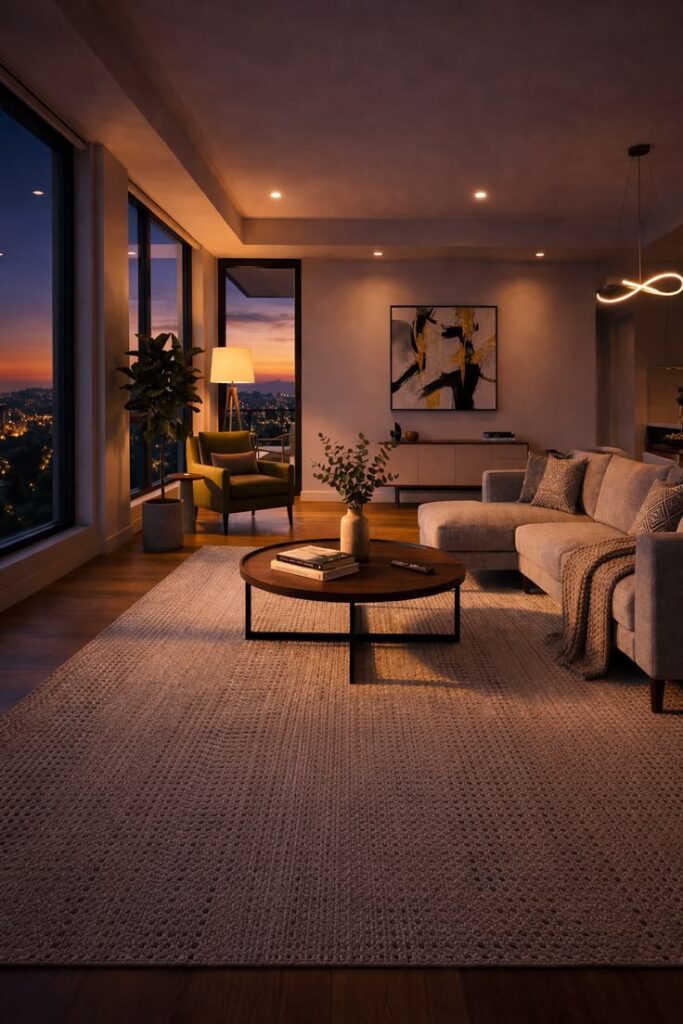
A centralized control system, such as those offered by brands like Crestron, Savant, or Control4, acts as the brain of your home. Instead of juggling a dozen different apps for your lights, shades, music, and security, you manage everything from a single, intuitive interface—be it a sleek wall-mounted keypad, a dedicated touchscreen, or your smartphone. This system allows for the creation of “scenes.” With a single command (or even a voice command), you can activate “Good Morning,” which gradually raises the shades, turns on the bathroom floor heat, and starts your favorite playlist in the kitchen. This level of integration is the epitome of modern luxury, providing effortless control that feels like magic, not a chore.
Lighting and Shades: Setting the Mood Automatically
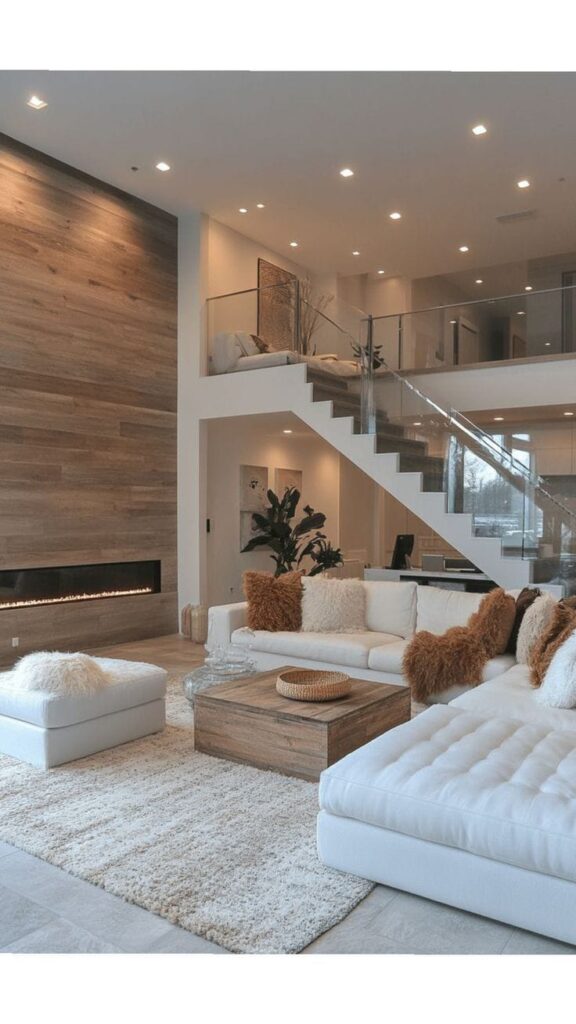
Lighting is the single most impactful element in interior design, and smart technology takes its power to a new level. The goal is to make the light fixture itself the focus, not the technology controlling it. This means using smart switches and dimmers that look like standard, high-end designer switches, rather than bulky plastic panels. These switches control warm, tunable LED lights that can change color temperature throughout the day—crisp and cool in the morning to promote alertness, and warm and amber in the evening to support relaxation and sleep.
Motorized window shades are the perfect partner to smart lighting. Gone are the days of long cords and manual pulls. Today’s shades are available in a vast array of luxurious fabrics and can be hidden entirely within the window casing or behind a valance. They can be programmed to raise and lower based on the sun’s position, protecting your furniture from UV damage while optimizing natural light and privacy. When integrated with your lighting scenes, they work in unison to create the perfect ambiance for any moment, from a bright, energetic morning to a cozy, intimate dinner party.
Disappearing Entertainment and Audio
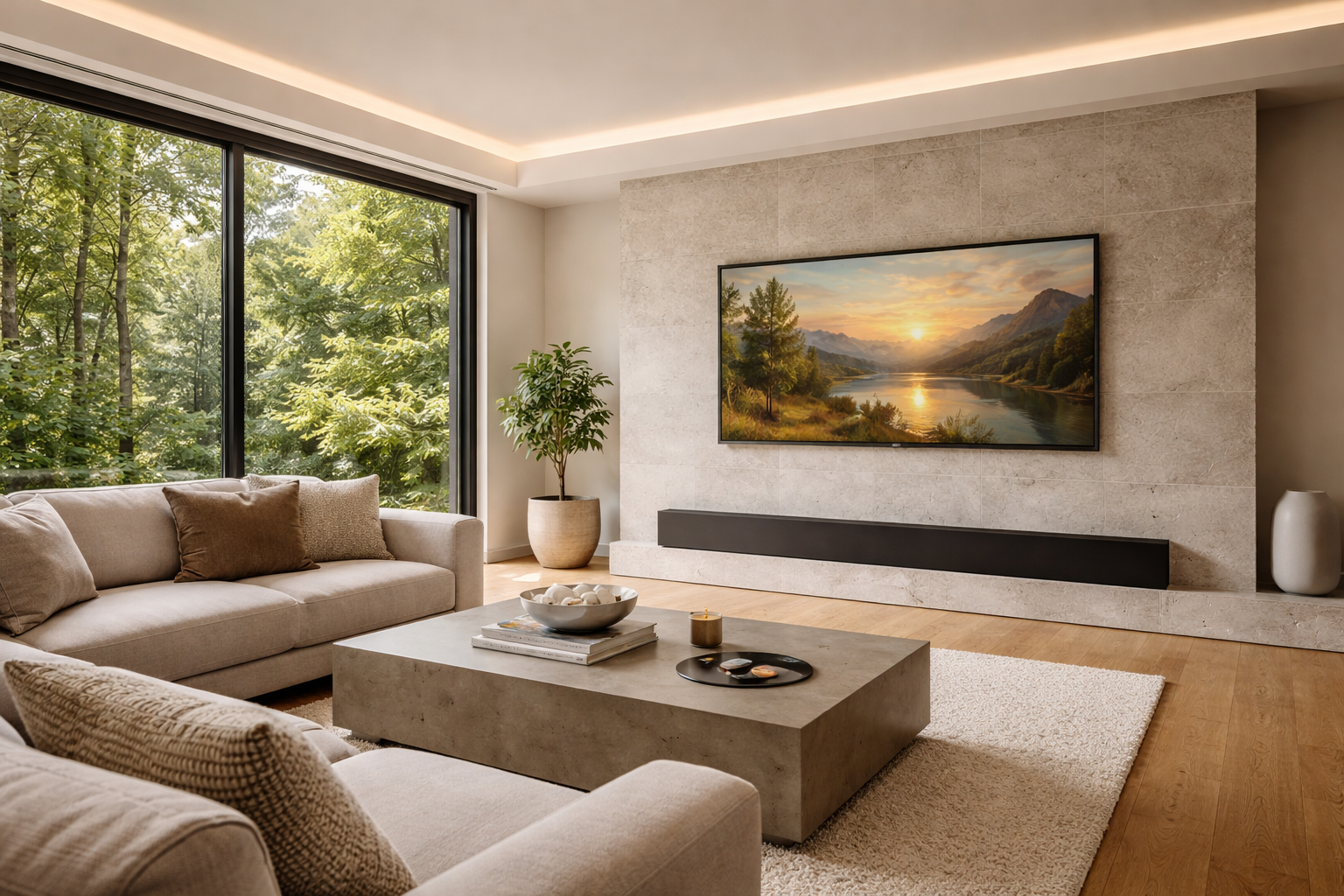
One of the biggest aesthetic challenges of the past was the television—a large, black rectangle that often dominated a living room. Modern technology offers elegant solutions. The most popular is the “TV as art” concept, exemplified by Samsung’s The Frame TV, which displays curated artwork when not in use, seamlessly blending in as a framed piece. For the ultimate in minimalist design, homeowners are opting for motorized, drop-down TVs that descend from the ceiling or rise from the foot of the bed, completely hidden when not needed.
Distributed audio has also evolved to be invisible. Instead of bulky speakers and soundbars, high-end systems now use in-wall and in-ceiling speakers that are flush-mounted and can be painted to match the wall or ceiling, making them virtually disappear. For the most discerning audiophiles, “invisible” speaker technology, like that from Amina or Stealth Acoustics, uses a proprietary material that is installed behind drywall or plaster, allowing the wall itself to become the speaker. This delivers high-fidelity sound throughout the home without a single visible component, preserving the architectural integrity of the space.
Climate, Security, and Wellness Integration
A truly smart home extends beyond entertainment and lighting to encompass your comfort and safety. Smart thermostats, like the Ecobee or Nest, have become design icons in their own right, but for a fully integrated look, they can be replaced with flush-mount temperature sensors that are controlled through your central system. These systems can learn your schedule and create zoned heating and cooling, ensuring that rooms are only conditioned when occupied, maximizing both comfort and energy efficiency.
Security and wellness features are also becoming more integrated and discreet. Keyless, architectural-grade smart locks allow you to monitor and control access to your home without the need for unsightly keypads. Whole-home air quality monitors can track VOCs, humidity, and CO2 levels, automatically triggering your ventilation system to maintain optimal health conditions. Even plumbing can be smart, with leak detection systems that can automatically shut off the main water line if a leak is detected, providing peace of mind and preventing costly damage. These systems work silently and reliably, making the home safer, healthier, and more efficient without any visual clutter.
Conclusion
The dream of a smart home is finally aligned with the dream of a beautiful home. The latest advancements in technology allow for a level of integration that was unimaginable just a decade ago. By focusing on a robust, invisible infrastructure, centralized control, and devices designed with aesthetics in mind, American homeowners can now enjoy a sanctuary that is both technologically advanced and supremely stylish. It’s a home that intuitively adapts to your life, enhances your well-being, and does so with an elegance that complements, rather than competes with, your carefully curated interior design. This is the new standard of luxury: a home that is not just a place to live, but a partner in living well.