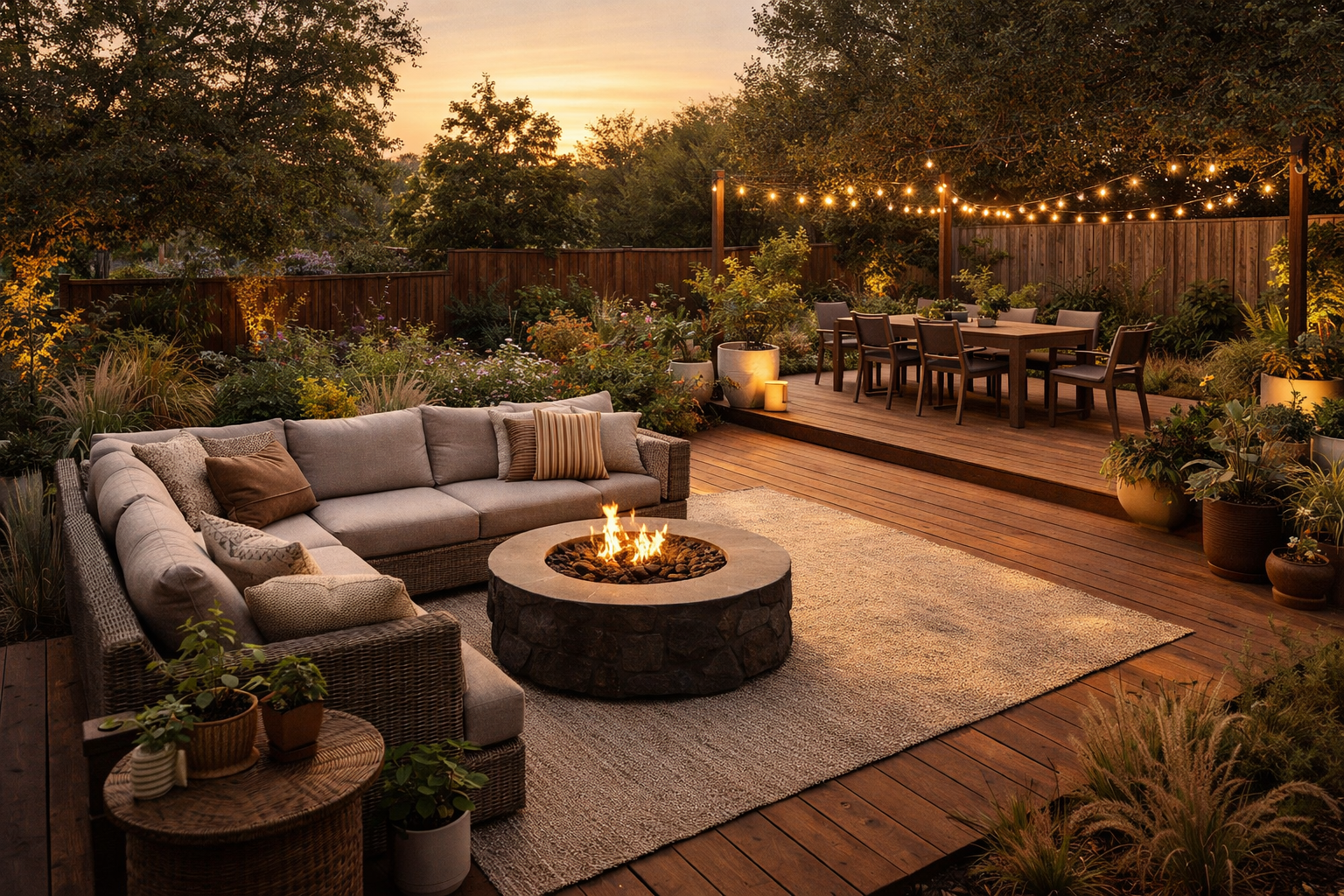
There’s something magical about the American dream of outdoor living. Whether it’s a sprawling suburban backyard in Ohio, a compact patio in Los Angeles, or a historic porch in Charleston, the desire to extend our living space beyond the four walls of our homes has never been stronger. The pandemic taught us the value of fresh air and outdoor sanctuaries, and in 2026, that lesson continues to shape how we design our exteriors.
Your outdoor space isn’t just a lawn anymore—it’s an extension of your home, a entertainment venue, a wellness retreat, and often, the first thing potential buyers see. Here’s how to transform your outdoor areas into stunning, functional spaces that enhance your lifestyle and boost your property’s value.
1. The Outdoor Room Concept
The most significant shift in exterior design is the move from “yard” to “outdoor room.” This philosophy treats your patio, deck, or garden as another living space that deserves the same design consideration as your interior.
Think about defining zones just as you would inside. Create a conversation area with comfortable seating arranged around a focal point like a fire pit or outdoor coffee table. Establish a dining zone with a table sized for your family and entertaining needs. If space allows, add a lounging area with chaise lounges for sunbathing or reading.
The key is to use outdoor rugs to anchor these spaces, just as you would indoors. Weather-resistant rugs in natural fibers or synthetic materials designed to withstand the elements add warmth and define separate areas within a larger space.
2. Covered Structures: Extending the Season
To truly maximize your outdoor living space, you need protection from the elements. Covered structures are booming in popularity across the US because they extend the usability of your outdoor space from just three months to nearly year-round.
Pergolas remain incredibly popular, especially when fitted with adjustable louvered roofs or retractable canopies that provide shade on sunny days but can be opened to the sky on pleasant evenings. Motorized retractable awnings offer flexibility without permanent structures.
For those seeking more substantial coverage, covered patios with solid roofs (either attached to the house or freestanding) create true outdoor rooms that can withstand rain and intense sun. Add ceiling fans for air circulation and outdoor-rated lighting fixtures, and you’ve created a space that’s comfortable even on hot summer afternoons .
3. Outdoor Kitchens: Beyond the Grill
The American love affair with cooking has moved outdoors. While the classic charcoal grill still has its place, today’s outdoor kitchens rival indoor ones in sophistication.
A well-designed outdoor kitchen might include a built-in gas grill, a pizza oven, a sink with running water, an outdoor refrigerator, and ample counter space for food preparation . Some ambitious homeowners are even adding keg coolers, ice makers, and warming drawers.
The key is to arrange these elements in a functional workflow, just as you would indoors. Position the cooking surfaces away from prevailing winds, ensure there’s adequate lighting for evening cooking, and consider weatherproof cabinetry made from stainless steel or marine-grade polymer that can withstand the elements.
4. Fire Features: Gathering Points
There’s something primal and irresistible about fire. Fire pits and outdoor fireplaces have become essential elements of outdoor living because they extend the season (taking the chill off cool evenings) and serve as natural gathering points.
Fire pits come in every style imaginable—from sleek, modern gas-powered bowls to rustic, wood-burning stone circles. Gas fire pits offer convenience (instant on/off, no smoke) while wood-burning provides the authentic crackle and scent that many love.
For a more dramatic statement, consider an outdoor fireplace. Whether a traditional masonry structure or a modern linear design, a fireplace adds architectural interest and creates a cozy focal point for your outdoor room .
5. Water Features: Sounds of Serenity
In our busy, connected world, creating a peaceful retreat is invaluable. Water features add a sensory dimension to your outdoor space—the gentle sound of flowing water masks neighborhood noise and creates an instant sense of calm.
Options range from simple tabletop fountains for small patios to elaborate pondless waterfalls or reflecting pools for larger properties. The key is to choose a style that complements your home’s architecture. A sleek, geometric fountain suits a modern home, while a naturalistic rock waterfall fits a rustic or woodland setting.
6. Landscape Lighting: The Magic Hour
Good lighting transforms outdoor spaces after dark, extending their usability and creating dramatic effects. Landscape lighting serves multiple purposes: safety (illuminating paths and steps), security (deterring intruders), and ambiance (highlighting beautiful plantings and architectural features).
Layered lighting is as important outdoors as indoors. Use path lights to guide the way, uplights to dramatize trees or architectural details, and string lights or lanterns to create a warm, festive atmosphere in seating areas.
Low-voltage LED systems are energy-efficient and easy to install. Solar lights have improved dramatically and offer a no-wire option for remote areas. For the ultimate in convenience, smart lighting systems allow you to control everything from your phone, setting scenes for different occasions .
7. Native and Drought-Tolerant Landscaping
As climate patterns shift across the US, water-wise landscaping has moved from trend to necessity. But “drought-tolerant” no longer means a yard full of rocks and a single cactus. Today’s native plant gardens are lush, colorful, and ecologically beneficial.
Native plants are adapted to your specific region’s rainfall and soil conditions, requiring far less water and maintenance than exotic species. They also support local pollinators—butterflies, bees, and birds—turning your garden into a thriving ecosystem.
The “New Perennial” movement, popularized by designers like Piet Oudolf, embraces a naturalistic style where grasses and flowering perennials are massed together in drifts that change with the seasons. This style is beautiful, low-maintenance, and environmentally responsible .
8. Edible Landscaping: Beauty You Can Eat
Why relegate vegetables to a hidden corner of the backyard? Edible landscaping integrates food-producing plants into your ornamental beds, creating beauty and bounty in the same space.
Purple kale, rainbow chard, and pepper plants offer striking foliage colors. Espaliered fruit trees (trained to grow flat against a wall) are architectural marvels. Blueberry bushes provide brilliant fall color and spring flowers, plus summer fruit. Herb gardens can be both fragrant and beautiful, with lavender, rosemary, and thyme offering texture and scent.
This approach maximizes your growing space while creating a garden that’s as beautiful as it is productive .
9. Sustainable Hardscaping
The materials you choose for patios, walkways, and retaining walls matter—both aesthetically and environmentally. Permeable paving options allow rainwater to soak into the ground rather than running off into storm drains, reducing erosion and recharging groundwater.
Recycled materials are also gaining popularity. Crushed concrete can serve as a base for new paths. Reclaimed brick and stone add instant character and reduce the demand for new quarrying. Composite decking made from recycled wood fibers and plastic offers the look of wood without the maintenance or environmental cost of old-growth timber .
10. Curb Appeal: The Welcome Mat
Finally, don’t forget the front of your house. Curb appeal isn’t just about impressing the neighbors or attracting buyers—it’s about creating a welcome home experience every single day.
Start with your front door. A bold color—think deep blue, cheerful yellow, or classic red—creates an instant focal point. Update house numbers and exterior light fixtures for a quick refresh. Add potted plants flanking the entrance, and ensure your walkway is clean and inviting.
Layered landscaping near the foundation softens the transition from house to yard. Choose plants that offer multi-season interest—spring bulbs, summer perennials, fall color, and evergreens for winter structure.
Your Outdoor Oasis Awaits
Creating an outdoor living space doesn’t have to happen all at once. Start with a comfortable seating area, then add elements over time—a fire pit one year, an outdoor kitchen the next. The goal is to create a space that draws you outside, that invites connection with family and friends, and that extends the beauty of your home into the natural world.